
Partner with us for reliable IT support. Contact us now and find out how we can streamline your IT needs!

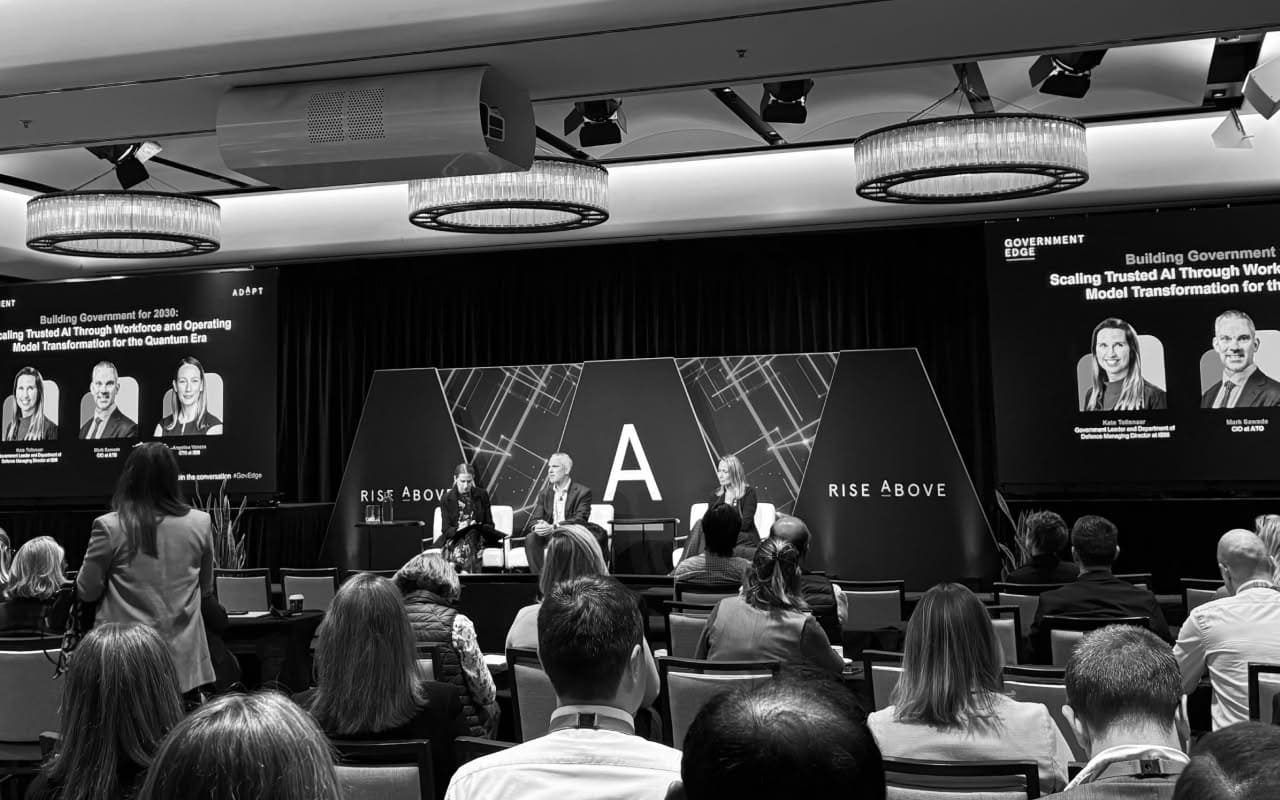
I sat in on our Brennan roundtable at ADAPT Gov Edge in Canberra earlier this month, and one word kept coming up: ‘heritage’.
Delegates used it to separate older systems that still do valuable work from those simply left to age.
My take is that most of these systems will, eventually, need modernising. The questions, as always, are deciding what to modernise, in what order, and on what evidence. It’s clear that a structured approach beats a blanket "replace it all" or "leave it alone".
An older system contains code as well as knowledge. The former is evident, the latter less so. One delegate described a platform that has run for more than three decades. They trust the inputs and, after years of results, the outputs. But nobody at the agency now knows how the calculation in the middle was built. Replacing it means rebuilding that "hidden middle" from scratch.
The good news is AI makes it much easier to reverse engineer what the code does. Applied correctly, it can map the data a system touches and draft a specification, a migration plan and new code. What it can't recover are the business rules behind the code, which sit in heads, some of whom have since left. This is where the team on the ground now will need to make a call.
The best approach pairs AI with people at every step. Nothing goes live without a person signing off. AI brings the speed. People bring the judgement.
Capture the knowledge first: interview long-serving staff and document the rules. Let AI do the heavy lifting on the code, then have experienced people review it and benchmark the outputs against known results.
Years of reliable results only show a system still does what it was built to do. The better question is whether its output meets today's standard or matches citizen expectations.
One delegate said a mainframe runs in a language most developers have never touched, yet still handles the daily transaction load. The question they posed is what can be hardened before working on what can be replaced.
Would changes, if implemented, positively impact business performance and the customer experience?
People matter too. About a fifth of the population is digitally excluded, and one delegate said they are often still best served by some of the older systems. Another said new rollouts had broken things the old systems handled fine. Staff acceptance was proving a hard sell, underscoring the need for strong change management to ensure transitions and adoption is embraced.
The PSPF Direction stocktake, announced in late September, is a natural extension of the heritage and legacy debate. The roundtable saw it as a dependency audit covering systems, data, identities, exposure and AI agents, not just a list,
On the main stage of ADAPT, speakers put numbers on that gap. ServiceNow said around 40% of assets connected to a typical agency environment can't be managed in the traditional sense. An attacker no longer needs an inventory to exploit what sits outside one.
Exposure is moving fast. A CVE for a Linux OS vulnerability was published two weeks ago, and working exploits were circulating before most organisations had seen the advisory.
The room’s view was that the era of security as border patrol is over. The job now is to shrink the attack surface.
The value of data matters, too. Some of what can be extracted from an old system may seem like an attractive target, but agencies weight its value differently.
My view is that "heritage" is a fair label for a system that can show what it holds, who is accountable for it, and that, with a reasonable investment and uplift, can meet today's standard. The decision shouldn't be driven by age, habit or a blanket mandate to replace everything. It should come from evidence.
That gives agencies a practical order of work. Systems that hold sensitive data, fail today's benchmark or carry the highest exposure come first. Systems that still perform and carry lower risk can wait, with a plan for when they won't. Easier said than done, but it holds up when someone asks why you did or didn't replace a system.
The hour flew by. We'll keep the conversation going when Brennan is back at ADAPT in Sydney in February, and I'm keen to see what 2027 delivers.




Partner with us for reliable IT support. Contact us now and find out how we can streamline your IT needs!